There is a particular kind of grief that arrives without warning, often before the world has had a chance to acknowledge that something worth grieving ever existed. It is the grief of pregnancy loss — of a future imagined, a name perhaps chosen, a room half-planned — that vanishes in a moment of silence where a heartbeat should have been.
Every year, millions of families around the world experience miscarriage or stillbirth. In the UK alone, approximately one in four pregnancies ends in miscarriage, and around one in every 200 births results in stillbirth. These are not rare events. And yet, the grief they leave behind remains one of the least spoken-about forms of bereavement in our culture.
What Is Pregnancy Loss?
Pregnancy loss is an umbrella term that includes miscarriage (pregnancy loss before 24 weeks), stillbirth (the loss of a baby after 24 weeks of pregnancy), and other forms of perinatal loss such as ectopic pregnancy or molar pregnancy. Each carries its own medical and emotional weight, and no loss is too small to grieve.
The language we use matters. A miscarriage at six weeks is not less devastating simply because it happened early. A stillbirth does not hurt less because the baby was never brought home. These experiences exist on a spectrum of love — and love, in all its forms, deserves to be mourned.
The Silence That Surrounds It
Part of what makes pregnancy loss so uniquely painful is the silence that tends to follow it. In many cultures, pregnancies are not announced until after the first trimester — precisely because miscarriage is so common in those early weeks. This well-intentioned caution has an unintended consequence: when a loss does occur, the grieving parent often has no network of people who even knew they were pregnant.
They grieve in private. They return to work within days, expected to perform normalcy while internally carrying the weight of a world that ended. Colleagues do not send flowers. There is no funeral, no formal acknowledgment, no culturally understood ritual for what has been lost. In many cases, the loss is not even recognized as a bereavement at all.
Even well-meaning people say the wrong things. "At least it was early." "You can try again." "It wasn't meant to be." These phrases, however kindly intended, minimize the reality of what has happened: a child was expected, was loved, and is now gone. The grief is real. The loss is real. And the parent's need to have that acknowledged is entirely valid.
The Emotional Reality of Pregnancy Loss
Grief after pregnancy loss rarely follows a neat or predictable path. It is not simply sadness — it is often a complex mixture of emotions that can feel overwhelming, contradictory, and isolating.
Shock and disbelief are common in the immediate aftermath. Even when warning signs existed, many parents describe a sense of unreality — a disconnection from what has happened that can persist for days or weeks.
Guilt is one of the most painful companions to this grief. Parents — and mothers especially — often search for something they did wrong: a glass of wine before they knew they were pregnant, a stressful week at work, a run they went on, a supplement they forgot to take. In the vast majority of cases, pregnancy loss is caused by chromosomal abnormalities or factors entirely outside anyone's control. Guilt, though understandable, is almost never warranted.
Anger is another frequent visitor. Anger at the body that felt like it failed. Anger at healthcare systems that can feel clinical and cold. Anger at friends who announce pregnancies easily, at the world that keeps moving when yours has stopped.
Grief anniversaries — the due date that came and went, the month a baby would have turned one — can reawaken pain long after others assume healing is complete. These invisible milestones are part of pregnancy loss grief that partners, family, and friends often don't fully understand.
The Grief That Partners Carry
Pregnancy loss is often discussed through the lens of the person who was pregnant, and rightly so — they carry the physical experience as well as the emotional one. But partners grieve too, often quietly, and frequently without support. There are few spaces where a father or non-birthing parent can express the depth of their loss without being subtly expected to be strong for someone else.
Couples sometimes grieve differently — at different paces, in different ways — and this can create distance at the very moment when closeness is most needed. Acknowledging that both people in a relationship have lost something real, and that their grief may look different, is an important part of navigating loss together.
Finding a Way Through
There is no map through grief, and no timeline that marks when it should end. But there are things that can help.
Naming and acknowledging the loss is often the first and most important step. Whether or not a name was chosen, many parents find comfort in naming their baby — giving them an identity, a place in the family story. This is not morbid. It is an act of love.
Seeking support matters enormously. Specialist bereavement organizations such as Tommy's, the Miscarriage Association, and SANDS (Stillbirth and Neonatal Death Society) offer counselling, community, and resources specifically designed for parents navigating pregnancy loss. Talking to others who have experienced the same grief — in person or online — can break through the isolation that so often accompanies it.
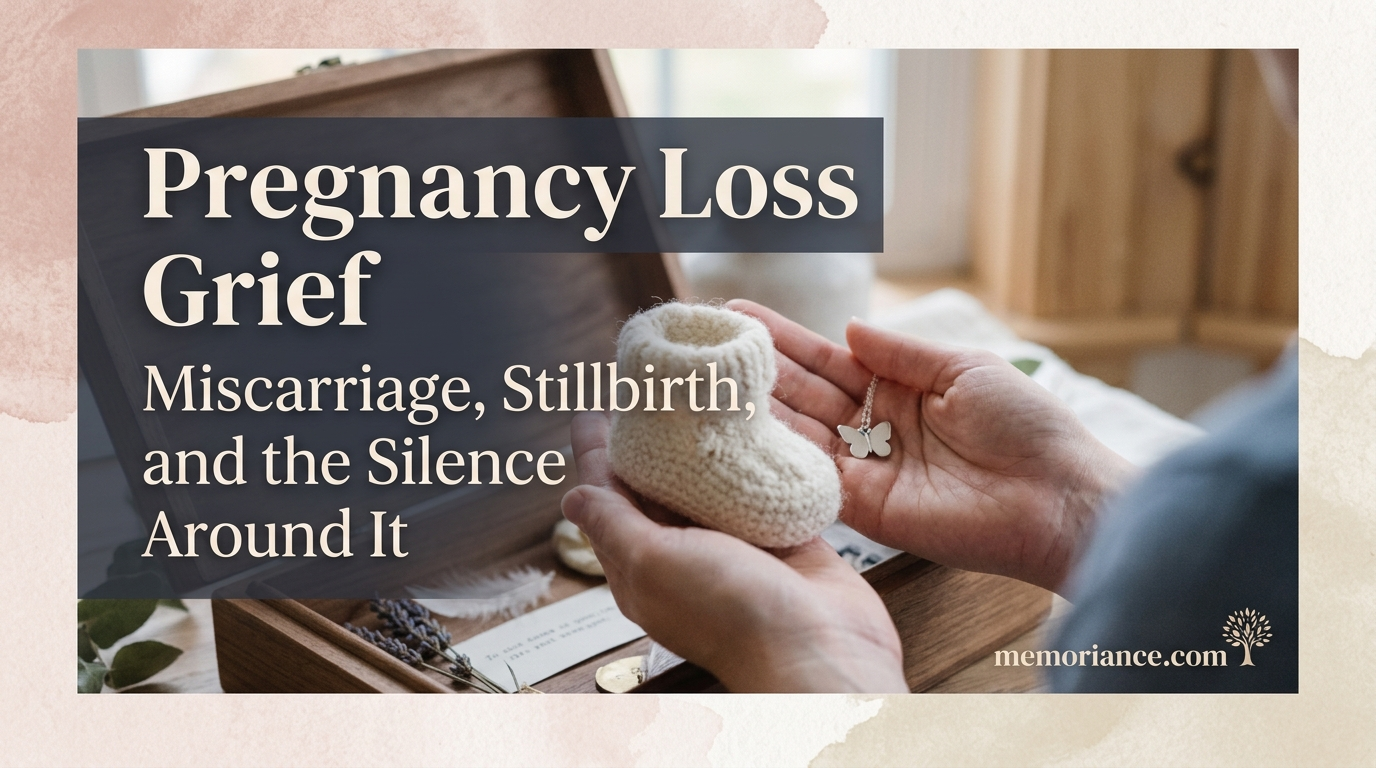
Creating a memorial is something many families find healing. A memory box, a piece of jewellery, a small garden planting, or a dedicated online memorial space can provide a way to honour a life that was brief but deeply real. Having a place to return to — somewhere that holds the memory — can be a quiet source of comfort through the years that follow.
Being patient with yourself is perhaps the hardest thing of all. Grief does not follow a schedule. There will be good days and days when the loss feels as fresh as it did at the beginning. Both are valid. Both are part of the same love.
Breaking the Silence
The silence around pregnancy loss is not inevitable. It is cultural — and cultures can change. More parents are speaking openly about their experiences, advocating for better bereavement support, and challenging the unspoken rule that early or invisible losses don't count.
If you have experienced pregnancy loss, know this: your grief is legitimate. Your baby existed. Your love for them was real. And you do not have to carry this in silence.
If someone you know has experienced a loss, the most healing thing you can do is simply acknowledge it. Say the baby's name if one was given. Say "I'm so sorry for your loss" without qualifiers. Ask how they are — and mean it. You do not need to have the right words. You only need to show up.
Pregnancy loss leaves a mark that does not disappear with time — it simply becomes something that is carried differently. In the act of remembering, of honouring, and of refusing to be silent, we offer grieving parents the one thing they need most: the knowledge that their child mattered, and that they are not alone.